





Fire Fighting Pump System Singapore – Singapore’s No 1 Best Pump service & supplier
Comprehensive Engineering and Compliance Guide to Fire Fighting Pump System Singapore Infrastructure
Active infrastructure protection forms the cornerstone of modern mechanical, electrical, and plumbing (MEP) design frameworks. At the absolute center of this protection infrastructure lies the Fire Fighting Pump System Singapore asset class. These mission-critical systems provide the necessary hydraulic pressure, volumetric flow rates, and fluid acceleration required to charge suppression systems across commercial, industrial, residential, and infrastructural developments throughout Singapore.
Ensuring compliance with the Singapore Civil Defence Force (SCDF) Fire Code, Singapore Standards (such as SS 575, SS 532, and the historical CP 52/CP 29 frameworks) requires a deep understanding of hydraulic engineering principles, statutory frameworks, installation requirements, and ongoing lifecycle validation techniques.
This document provides a comprehensive, highly technical blueprint covering every element of an enterprise-grade Fire Fighting Pump System Singapore deployment. It explores everything from mechanical configurations and electrical control parameters to regulatory alignments and preventative preservation protocols.
1. Statutory Frameworks and Regulatory Ecosystem
Operating or engineering an automatic water suppression network in Singapore requires strict compliance with localized statutory frameworks. The deployment of a Fire Fighting Pump System Singapore configuration is heavily regulated, with compliance monitored closely by the SCDF
1.1 SCDF Fire Code and Core Mandates Fire Fighting Pump System Singapore
The SCDF Fire Code establishes exactly when, where, and how high-pressure fluid mechanics must be integrated into a structure. Under these regulations, a building’s total habitable height, its gross floor area (GFA), and its assigned purpose group dictate the specific design parameters of its Fire Fighting Pump System Singapore installation. For instance:
- High-rise structures with a habitable height exceeding 60 meters require dedicated wet rising main structures supported by multi-stage high-pressure pump sets.
- Industrial facilities categorized under high-hazard groupings require dedicated independent fire pump configurations capable of sustaining high flow rates for extended periods.
1.2 Singapore Standard SS 575 (Formerly CP 29) Fire Fighting Pump System Singapore
SS 575 serves as the definitive code of practice for fire hydrant, wet rising main, and hose reel systems within Singapore. This standard outlines precise hydraulic performance requirements for any Fire Fighting Pump System Singapore installation:
- Hose Reel Subsystems: Must maintain a minimum flow rate of 0.4 liters per second ($L/s$) per reel at a running pressure of not less than 2 bars at the hydraulically most remote nozzle.
- Wet Rising Mains: Require pump systems capable of delivering a minimum flow rate of 27 to 38 $L/s$ per running stream, while maintaining a residual pressure of between 3.5 bars and 5.5 bars at the highest landing valve location.
1.3 Singapore Standard SS 532 Alignment Fire Fighting Pump System Singapore
For specialized industrial facilities, oil refineries, and chemical storage depots across Jurong Island and mainland industrial clusters, the Fire Fighting Pump System Singapore architecture must align with SS 532 (Code of Practice for the Storage of Flammable Liquids). This standard mandates specific provisions for high-volume foam-water deluge installations, medium-velocity water spray systems, and industrial-grade monitor pumps capable of handling harsh, volatile operating environments.
2. Core Mechanical Components and System Architecture
An institutional-grade Fire Fighting Pump System Singapore setup relies on a complex network of mechanical assemblies designed to work together seamlessly when an emergency arises.
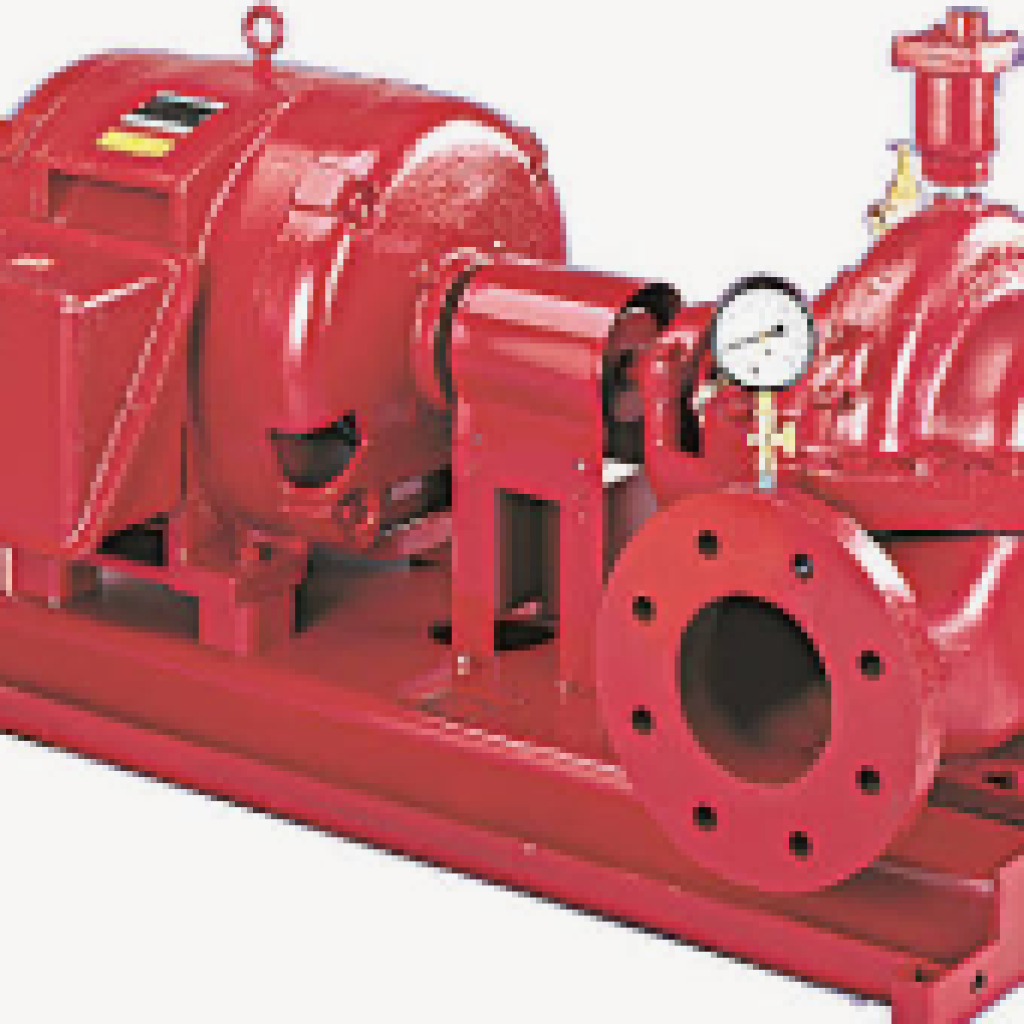
2.1 Centrifugal Fire Pumps: End-Suction vs. Split-Case vs. Vertical Turbine Fire Fighting Pump System Singapore
Selecting the right pump type is critical to achieving the necessary hydraulic performance:
- End-Suction Centrifugal Pumps: Typically used in small to medium commercial properties where space is tight and flow demands are under 1,500 gallons per minute (GPM). They feature a compact footprint and offer straightforward direct maintenance.
- Horizontal Split-Case (HSC) Pumps: The preferred choice for high-volume Fire Fighting Pump System Singapore projects. The split-casing design allows maintenance teams to access the internal impeller assembly and shaft seals without disconnecting the main suction or discharge piping. This maximizes system uptime during maintenance turnarounds.
- Vertical Turbine Pumps: Used when the primary water supply originates from a subterranean water storage reservoir or deep-well retention basin located below the pump centerline. This configuration eliminates the risk of suction lift issues by keeping the pump bowls submerged.
2.2 Prime Movers: Electric Motor vs. Compression-Ignition Diesel Engines Fire Fighting Pump System Singapore
To ensure maximum reliability, a standard Fire Fighting Pump System Singapore setup combines an electric motor pump with a standby diesel engine pump:
| Engineering Parameter | Electric Motor Drive Unit | Compression-Ignition Diesel Engine Drive |
| Primary Power Dependency | Public Utility Grid (SP Group) / Standby Genset | On-board Fuel Storage Tank (Independent) |
| Startup Response Time | Immediate ($< 5$ seconds via automated contactors) | Fast ($< 10$ seconds via dual-redundant DC starters) |
| Cooling Requirements | Ambient Air Convection Ventilation | Heat Exchanger Loop / Engine Radiator Flow |
| Maintenance Profile | Low (Periodic insulation and bearing checks) | High (Weekly fluid inspections, filter swaps, battery testing) |
| SCDF Compliance Role | Primary operational unit for initial response | Ultimate failsafe during a total grid failure |
2.3 Pressure Maintenance (Jockey) Pumps Fire Fighting Pump System Singapore
A jockey pump is a small, low-capacity vertical multi-stage centrifugal pump designed to maintain static pressure within the distribution pipe network. Without a well-calibrated jockey pump, tiny leaks at pipe joints or landing valves would cause pressure to drop, repeatedly triggering the large primary Fire Fighting Pump System Singapore assemblies. This quick cycling can lead to accelerated wear and electrical surges. The jockey pump is set to activate at a higher pressure threshold than the main pumps, handling minor pressure drops quietly and efficiently.
2.4 Suction and Discharge Piping Configurations
The piping layout around a Fire Fighting Pump System Singapore setup must be designed carefully to avoid turbulence and minimize hydraulic friction losses:
- Suction Lines: Must use eccentric reducers with the flat side facing up. This prevents air pockets from forming, which could lead to cavitation and damage the pump impeller.
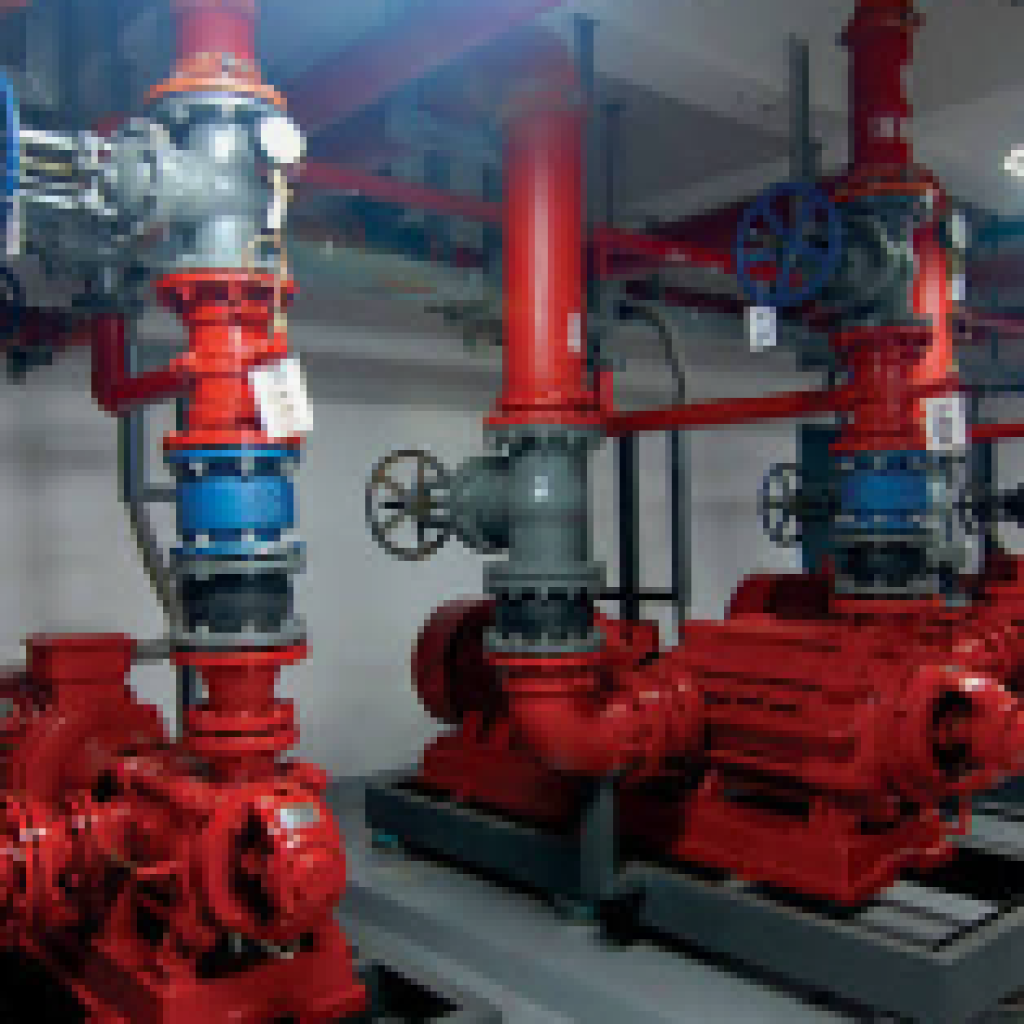
- Discharge Lines: Must use concentric reducers, paired with quick-closing non-slam check valves and OS&Y (Outside Screw and Yoke) isolation gate valves to simplify isolation and maintenance.
3. Electrical Systems and Control Panels Fire Fighting Pump System Singapore
The mechanical components of a Fire Fighting Pump System Singapore installation rely heavily on robust, well-engineered electrical controls to manage their operations automatically and safely.
3.1 Controller Specifications and Enclosure Design Fire Fighting Pump System Singapore
Fire pump controllers must be housed in robust, heavy-gauge enclosures that carry a minimum IP54 or IP55 rating, protecting them from dust and water spray. In line with SCDF requirements and international standards like NFPA 20, these control systems cannot use standard overload protection circuits. Instead of tripping to protect the motor from overheating, a fire pump controller is configured to run the motor to destruction if necessary during a major fire event, prioritizing continuous water delivery above all else.
3.2 Power Supplies and Automatic Transfer Switches (ATS) Fire Fighting Pump System Singapore
To guarantee uninterrupted operation, the primary electric drive within a Fire Fighting Pump System Singapore deployment requires a highly reliable dual-source power feed. This setup routes electricity from both the public grid and an on-site standby emergency generator through a dedicated, fire-rated Automatic Transfer Switch (ATS). All electrical cabling feeding the Fire Fighting Pump System Singapore room must feature certified fire-resistant construction (such as mineral-insulated copper-clad cables) capable of maintaining electrical integrity for at least 2 hours when exposed to direct flame.
3.3 Starting Methods: Star-Delta, Direct-On-Line, and Soft Starters Fire Fighting Pump System Singapore
Managing the initial electrical current surge when starting a large motor requires careful consideration:
- Direct-On-Line (DOL): Simple and cost-effective, but creates a massive current draw that can strain smaller electrical systems.
- Star-Delta Starters: Reduces the initial voltage during startup, lowering the current surge before switching to full operational speed.
- Solid-State Soft Starters: Provides a smooth, controlled ramp-up in speed. This minimizes both electrical strain on the grid and mechanical stress on the pump shaft and impeller components.
4. Hydraulic Calculations and Engineering Principles Fire Fighting Pump System Singapore
Designing a reliable Fire Fighting Pump System Singapore network requires precise hydraulic calculations to ensure the pumps can deliver adequate flow and pressure to the furthest points of a building.
4.1 Determining System Demand Flow Rates ($Q$)
System flow rates are determined by assessing the total hazard profile of the property. For a standard wet riser installation under SS 575, the system must be capable of supporting three distinct landing valves operating simultaneously. This requires a minimum total flow rate calculated as
4.2 Calculating Total Dynamic Head (TDH)
The Total Dynamic Head represents the total pressure the pump must generate to overcome gravity and friction losses throughout the pipe network. It is calculated using the following formula:
4.3 Understanding Performance Curves and Cavitation Risk Fire Fighting Pump System Singapore
An engineered Fire Fighting Pump System Singapore assembly must feature a well-balanced performance curve:
To prevent performance-dropping cavitation, engineers must ensure the Net Positive Suction Head Available ($\text{NPSH}_A$) always exceeds the Net Positive Suction Head Required ($\text{NPSH}_R$) by a safety margin of at least 1 meter under all operational conditions:
5. Storage Reservoirs and Break Tanks
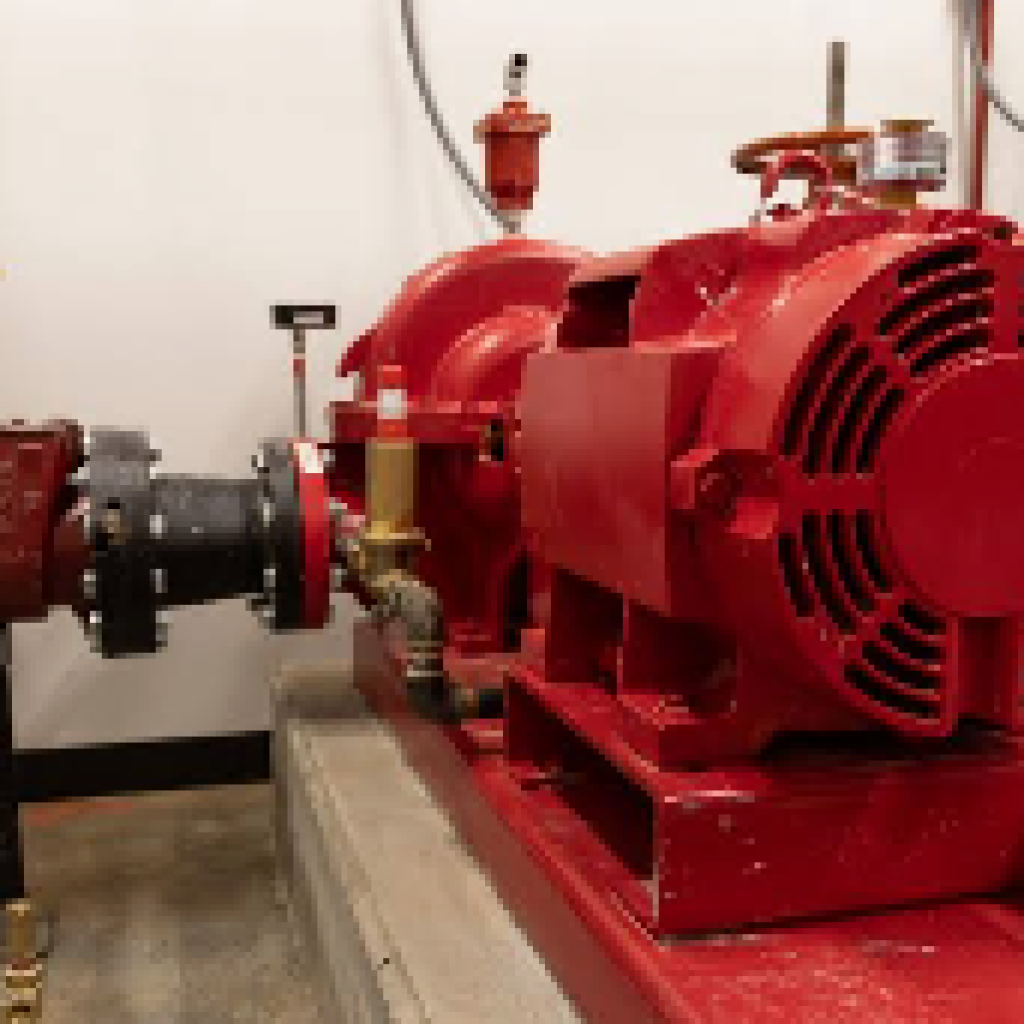
A Fire Fighting Pump System Singapore installation is only as reliable as its water source. The design must ensure an adequate, uninterrupted supply of water during emergencies.
5.1 Effective Storage Capacities and SCDF Regulations Fire Fighting Pump System Singapore
SCDF regulations state that fire protection systems cannot rely solely on direct mains water from the public utility network. Instead, properties must install an on-site water storage reservoir or break tank. The effective storage capacity is calculated based on the building’s hazard classification and the required duration of protection:
- Hose Reel Systems: Typically require a minimum dedicated storage volume of 2,250 to 4,500 liters, depending on the property type.
- Wet Riser Configurations: Often require dedicated storage tanks holding between 45,000 and 90,000 liters of water to ensure continuous firefighting operations before external reinforcement arrives.
5.2 Tank Construction: Modular Reinforced Plastics (GRP) vs. Pressed Steel Fire Fighting Pump System Singapore
- Modular GRP (Glass Reinforced Plastic) Tanks: Highly popular across Singapore due to their exceptional corrosion resistance, lightweight modular components, and ease of assembly in tight basement or rooftop spaces.
- Pressed Carbon Steel Tanks: Coated with hot-dipped galvanizing or internal epoxy liners, these tanks offer high structural strength but require regular maintenance to monitor and prevent corrosion over time.
5.3 Automated Inflow Controls and Vortex Inhibitor Elements
To maintain sufficient water levels during an active fire event, break tanks must feature automated mechanical ball float valves paired with electronic level sensors connected to the building management system. Additionally, the tank suction outlet must be equipped with a certified vortex inhibitor. This component prevents air vortices from forming as the tank drains, which would otherwise introduce air into the suction lines and damage the primary Fire Fighting Pump System Singapore impellers.
6. Installation Methodologies and Pump Room Engineering Fire Fighting Pump System Singapore
Properly installing a Fire Fighting Pump System Singapore setup requires a well-engineered physical environment that protects the equipment and ensures long-term reliability.
6.1 Fire-Rated Enclosures and Room Layouts
The pump room must be a dedicated space enclosed by structural walls and doors offering at least a 2-hour fire resistance rating. This room should not contain any unrelated utilities, such as gas lines, high-voltage transformers, or general storage. The layout must leave a clear clearance of at least 750 mm around all equipment to allow maintenance teams to perform routine inspections, repairs, and component replacements easily.
6.2 Structural Foundations and Vibration Isolation Fire Fighting Pump System Singapore
Because these large pumps generate significant dynamic forces during startup and operation, they must be mounted on heavy, reinforced concrete inertia blocks. These blocks should weigh at least 1.5 to 2 times the total weight of the pump and motor assembly combined. These concrete pads are then isolated from the main building structure using high-deflection spring vibration isolators, preventing acoustic rumble and structural vibrations from traveling through the building.
6.3 Environmental and Ventilation Controls
The pump room requires reliable ventilation systems to manage heat and exhaust:
- Electric Motor Configurations: Require continuous ambient air circulation to dissipate the heat generated by the high-power motors.
- Diesel Engine Configurations: Need dedicated high-capacity mechanical ventilation loops to provide combustion air and dissipate engine heat, along with a secure, insulated exhaust piping system routed safely to the exterior of the building.
7. Testing, Commissioning, and SCDF Certification
Before a newly installed Fire Fighting Pump System Singapore setup can go live, it must undergo strict verification testing to confirm it meets all design and performance specifications.
7.1 Hydrostatic Pressure Testing Protocols
The entire distribution network and the pump assemblies must pass a comprehensive hydrostatic pressure test. The piping system is filled with water and pressurized to either 1.5 times the maximum working pressure or a minimum of 14 bars—whichever is greater—and held for at least 2 consecutive hours. The test is successful only if there is zero drop in pressure and no visible signs of leakage across all joints, valves, and fittings.
7.2 Plotting and Verifying the Hydraulic Flow Performance Curve
During commissioning, technicians run the pump at various flow rates to map its performance curve against the manufacturer’s original specifications:
- 0% Flow (Churn Pressure): Verifies the system pressure stays within safe structural limits.
- 100% Flow (Design Point): Confirms the pump delivers the exact pressure and volume it was designed for.
- 150% Flow (Overload Point): Evaluates the pump’s performance under extreme demand to ensure it can operate reliably without stalling or dropping below $65\%$ of its rated head pressure.
7.3 SCDF Licensing and RI (Registered Inspector) Sign-Off
Once commissioning is complete, a Professional Engineer (PE) or Qualified Person (QP) submits the official testing records and as-built drawings to the SCDF via the CORENET portal. A Registered Inspector (RI) then conducts an on-site physical inspection to verify the entire installation matches the approved plans. After a successful inspection, the SCDF issues the Fire Safety Certificate (FSC), which formally permits the building to be occupied.
8. Preventive Maintenance and Asset Lifecycle Optimization
Regular, structured preventative maintenance is essential to ensure a Fire Fighting Pump System Singapore deployment remains fully operational and ready to respond instantly to an emergency.
8.1 Weekly Inspection Routine (No-Flow Test Run)
Maintenance teams must run the primary electric and standby diesel pumps for a short duration every week without discharging water into the main system:
- Electric Pumps: Run for at least 10 minutes to verify smooth starting and check for overheating in the bearings or electrical contacts.
- Diesel Engines: Run for at least 20 minutes to reach full operating temperature, allowing technicians to verify automated battery charging, fuel supply levels, oil pressure, and cooling water loop performance.
8.2 Monthly and Quarterly Inspection Milestones
- Monthly: Inspect all lead-acid starter batteries, check electrolyte levels, grease mechanical bearings, and examine shaft seals for any excessive packing leaks.
- Quarterly: Inspect and test all supervisory isolation valves, verify pressure switch setpoints, and clean out any debris from the suction strainers.
8.3 Annual Certified Flow Testing Requirements
Once a year, the system must undergo a comprehensive flow test using a calibrated flow meter or a multi-valve test header. This test measures the pump’s actual performance at 0%, 100%, and 150% capacity, comparing the results to the original commissioning curves. Any drop in performance exceeding $5\%$ requires immediate investigation and corrective maintenance, such as adjusting impeller clearances or replacing worn wear rings.
9. Troubleshooting and Diagnostic Engineering
Even with regular maintenance, complex mechanical and electrical systems can occasionally develop issues. Quick, accurate troubleshooting is vital to keeping the system operational.
9.1 Diagnosing Failure to Start
When a primary or secondary pump fails to activate during a test or emergency, technicians can use the following diagnostic sequence:
9.2 Addressing Common Hydraulic Performance Issues
- Excessive Churn Vibration: Often caused by a misaligned shaft between the motor and pump, or uneven wear on the impeller blades. This requires precise laser realignment or dynamic balancing.
- Rapid On/Off Cycling: Usually indicates a problem with the pressure maintenance system. Technicians should inspect the jockey pump’s pressure switch settings or check for a torn bladder membrane in the pre-charged pressure tank.
- Failure to Build Pressure: Typically points to air trapped in the pump casing, an obstructed suction line, or a partially open pressure relief valve that is diverting water back to the break tank.
10. Digitalization and the Future of Smart Fire Protection
As Singapore moves forward with its Smart Nation initiative, fire protection infrastructure is shifting toward digital management and real-time connectivity.
10.1 IoT Integration and Cloud Telemetry Monitoring
Modern Fire Fighting Pump System Singapore installations frequently incorporate Internet of Things (IoT) sensor networks. By installing connected sensors directly on the equipment, building operators can monitor critical operational data—such as pump room ambient temperatures, battery voltages, vibration profiles, and discharge header pressures—from a centralized cloud dashboard.
10.2 Predictive AI Maintenance Protocols
By using cloud analytics and machine learning algorithms, modern systems can shift from fixed-schedule maintenance to predictive maintenance. By analyzing continuous operational data, the software can identify early indicators of component wear—such as subtle changes in motor current draw or small increases in bearing vibrations. This allows facility managers to schedule targeted repairs before an actual equipment failure occurs.
10.3 Integration with SCDF Smart Fire Alarm Systems
Integrating smart pump room controllers with a building’s central fire alarm system provides a direct link to SCDF-approved external monitoring centers. If a primary pump activates or experiences a critical fault, an automated signal is transmitted instantly to the monitoring center. This ensures rapid emergency response coordination and gives emergency teams valuable situational awareness before they even arrive on site.
11. Appendix: Engineering Reference Checklists
These quick-reference checklists provide engineers and facility managers with a structured tool for evaluating system compliance and performance.
11.1 Pre-Commissioning Mechanical Checklist
- [ ] Verify the flat side of all eccentric suction reducers faces up to prevent air pockets.
- [ ] Confirm structural tie-down bolts on the concrete inertia pads are torqued to manufacturer specifications.
- [ ] Check that a certified vortex inhibitor is correctly installed on the tank suction outlet.
- [ ] Ensure all isolation valves are locked in the fully open position and equipped with functional electronic tamper switches.
11.2 Electrical and Control System Checklist
- [ ] Confirm the Automatic Transfer Switch (ATS) seamlessly switches between utility grid power and generator backup.
- [ ] Verify the fire pump controller is configured to prioritize running over motor overload protection.
- [ ] Check that all power and control cabling features a certified 2-hour fire resistance rating.
- [ ] Test that all alarm signals display correctly on both the local controller panel and the building’s central Fire Command Centre (FCC).
12. Conclusion
A Fire Fighting Pump System Singapore deployment is a sophisticated combination of mechanical engineering, electrical control systems, and strict regulatory compliance. Designing, installing, and maintaining these systems requires continuous attention to detail, from initial hydraulic calculations to long-term preventive care. By following the standards of SS 575, SS 532, and the SCDF Fire Code, building owners and engineers can ensure their fire protection infrastructure remains robust, reliable, and ready to protect lives and property throughout its operational lifecycle.
Contact Information:
- Website: https://flomek.com
- Email: sales@flomek.com
- Phone: +65 1234 5678
- Address: 123 Industrial Avenue, Singapore 567890
Get in touch with us today to discuss your project or request a quote. Let Flomek help you find the perfect pump solution to keep your operations flowing smoothly. Pump manufacture in yishun
Also Read – Best pump services Pump manufacture in yishun
Copyright © Flomek 2024, All Right Reserved.Designed and Developed by ❤️ Krigo Softwares


Leave A Reply