





Fire Fighting Pump System in Singapore – Singapore’s No 1 Best Pump service & supplier
The Ultimate Guide to choosing a Fire Fighting Pump System in Singapore
In urban infrastructure, fire safety is a foundational necessity. In a densely populated landscape like Singapore, characterized by soaring skyscrapers, expansive commercial hubs, industrial zones, and dense residential estates, fire mitigation strategies must be flawless. At the core of every robust fire protection installation lies a reliable water supply infrastructure driven by an optimized machinery room. When choosing a Fire Fighting Pump System in Singapore, building owners, facility managers, and mechanical consultants must navigate technical specifications, stringent statutory codes, and environmental demands.
This exhaustive guide covers everything required to deploy, manage, and maintain a high-performance Fire Fighting Pump System in Singapore. We will analyze structural topologies, decode Singapore Civil Defence Force (SCDF) mandates, examine international testing frameworks like UL/FM, unpack mechanical design equations, and outline rigorous testing and commissioning routines.
1. Introduction to Fire Fighting Pump Systems in Singapore
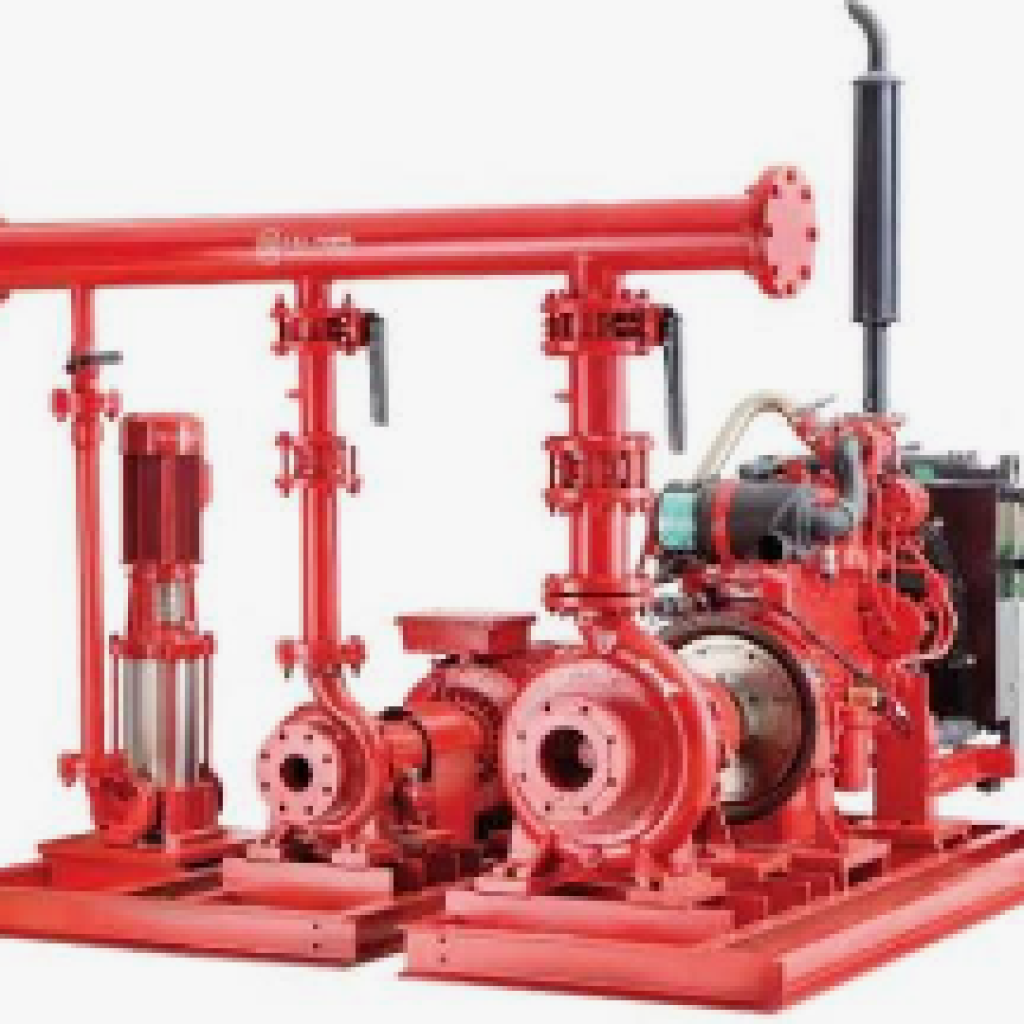
A Fire Fighting Pump System in Singapore is an active fire protection network engineered to deliver high-pressure, high-velocity water volumes to fire suppression assets across a facility. Unlike domestic water booster loops designed for variable, everyday consumption, an emergency water system operates as an emergency response asset. It remains stagnant for long periods but must instantly step up to maximum operational performance when an alarm triggers.
+-------------------------------------------------------------------------+
|                       WATER SOURCE (Storage/Break Tank)                 |
+-------------------------------------------------------------------------+
                                     |
                                     v
+-------------------------------------------------------------------------+
|                  SUCTION HEADER & ISOLATION VALVE                       |
+-------------------------------------------------------------------------+
                                     |
           +-------------------------+-------------------------+
           |                         |                         |
           v                         v                         v
+--------------------+     +--------------------+     +--------------------+
|   JOCKEY PUMP      |     |  DUTY FIRE PUMP    |     | STANDBY FIRE PUMP  |
| (Pressure Maint.)  |     |  (Electric/Diesel) |     |  (Diesel/Electric) |
+--------------------+     +--------------------+     +--------------------+
           |                         |                         |
           +-------------------------+-------------------------+
                                     |
                                     v
+-------------------------------------------------------------------------+
|                DISCHARGE HEADER & NON-RETURN VALVES                     |
+-------------------------------------------------------------------------+
                                     |
           +-------------------------+-------------------------+
           |                         |                         |
           v                         v                         v
+--------------------+     +--------------------+     +--------------------+
| Sprinkler Networks |     | Wet Riser Stacks   |     | External Hydrants  |
+--------------------+     +--------------------+     +--------------------+
Purpose and Functionality Fire Fighting Pump System in Singapore
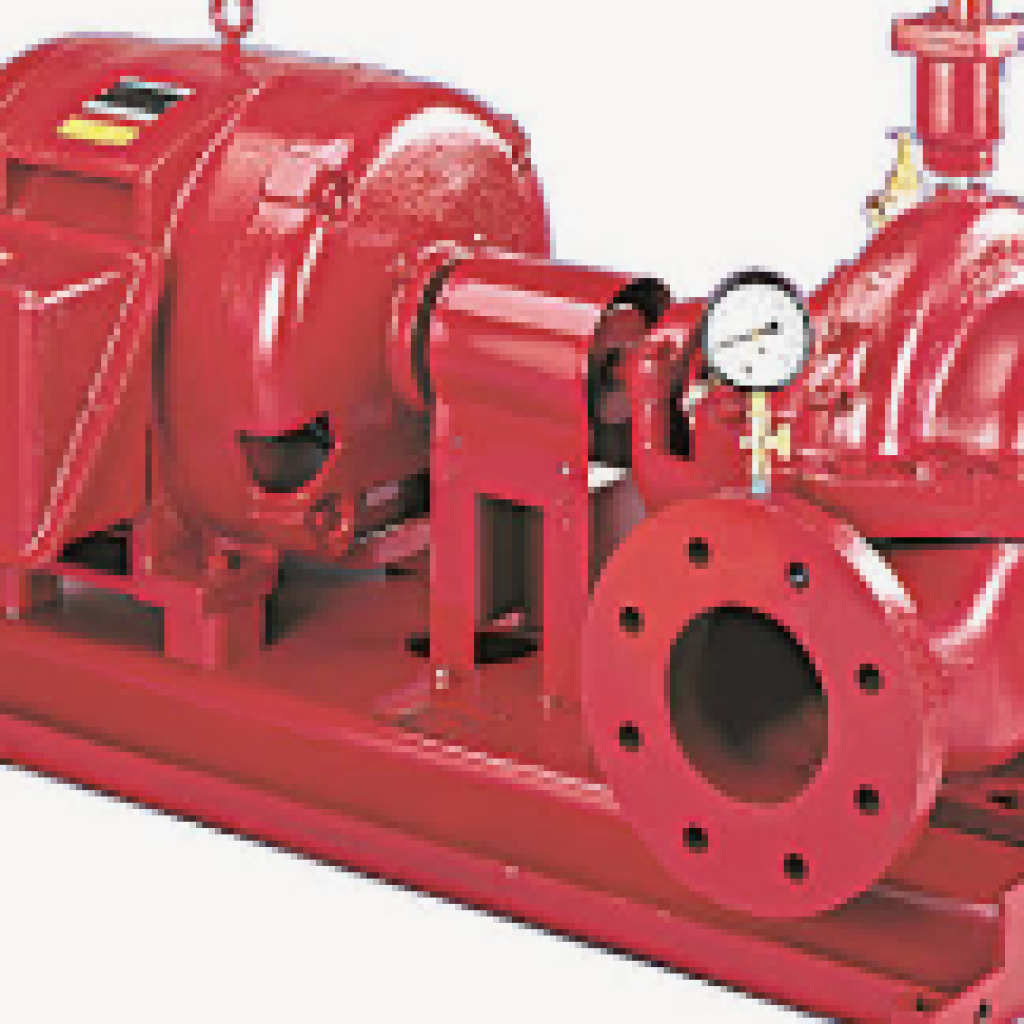
When a fire breaks out, sprinkler heads shatter or landing valves open, causing water pressure within the distribution pipework to drop significantly. The Fire Fighting Pump System in Singapore senses this drop and activates automatically to stabilize the system profile. It pumps water from dedicated storage reservoirs through underground or vertical distribution mains to suppress fires quickly.
The Singapore Context
Singapore’s tropical environment, high-density high-rise buildings, and strict regulatory environment require highly specific infrastructure choices. Selecting a Fire Fighting Pump System in Singapore means conforming directly to the SCDF Fire Code and specific Singapore Standards (SS). These standards outline minimum flow velocities, structural layouts, and material tolerances.
2. Regulatory Compliance & Singapore Standards Fire Fighting Pump System in Singapore
Navigating code compliance is critical when planning a Fire Fighting Pump System in Singapore. SCDF regularly updates its guidelines to reflect global engineering advancements and domestic safety trends.
                +----------------------------------------+
                |     SCDF FIRE CODE COMPLIANCE          |
                +----------------------------------------+
                                    |
       +----------------------------+----------------------------+
       |                                                         |
       v                                                         v
+---------------------------------------+ +---------------------------------------+
|                SS 575                 | |                SS 532                 |
|  Code of Practice for Fire Hydrants,  | |  Code of Practice for the Storage of  |
|    Rising Mains, & Hose Reels         | |           Flammable Liquids           |
+---------------------------------------+ +---------------------------------------+
SCDF Fire Code Requirements Fire Fighting Pump System in Singapore
The Singapore Civil Defence Force (SCDF) Code of Practice for Fire Precautions in Buildings is the primary regulatory framework for local building safety. Any Fire Fighting Pump System in Singapore must fit into a compliant building blueprint. This includes meeting rules for dedicated equipment rooms, fire-rated enclosures (minimum 2-hour rating), independent emergency ventilation systems, and clear egress pathways for service personnel.
SS 575: Code of Practice for Fire Hydrant, Rising Mains, and Hose Reel Systems
Previously known as CP 29, SS 575 is the foundational standard governing automated water infrastructure design in Singapore. It sets specific guidelines for Fire Fighting Pump System in Singapore:
- Hydraulic calculation practices.
- Running pressures for landing valves, requiring between 3.5 bar and 5.5 bar under peak discharge conditions.
- Minimum capacity criteria for suction break tanks.
- Mandatory inclusion of backup power lines to maintain operational readiness during primary grid failures.
SS 532 & Flammable Liquid Storage Fire Fighting Pump System in Singapore
For industrial sites or high-rise complexes featuring internal combustion backup drives, SS 532 sets rules for fuel storage configurations. A diesel-driven Fire Fighting Pump System in Singapore requires a dedicated sub-base fuel tank with sufficient capacity for continuous operation during emergency scenarios. These setups must include specialized fuel containment bunds, overfill prevention controls, and flame-arresting ventilation ports.
3. Core Components of a Fire Fighting Pump System
An industrial Fire Fighting Pump System in Singapore combines heavy mechanical hardware with automated electrical controls. Each component must be engineered to handle immediate, high-stress operational demands.
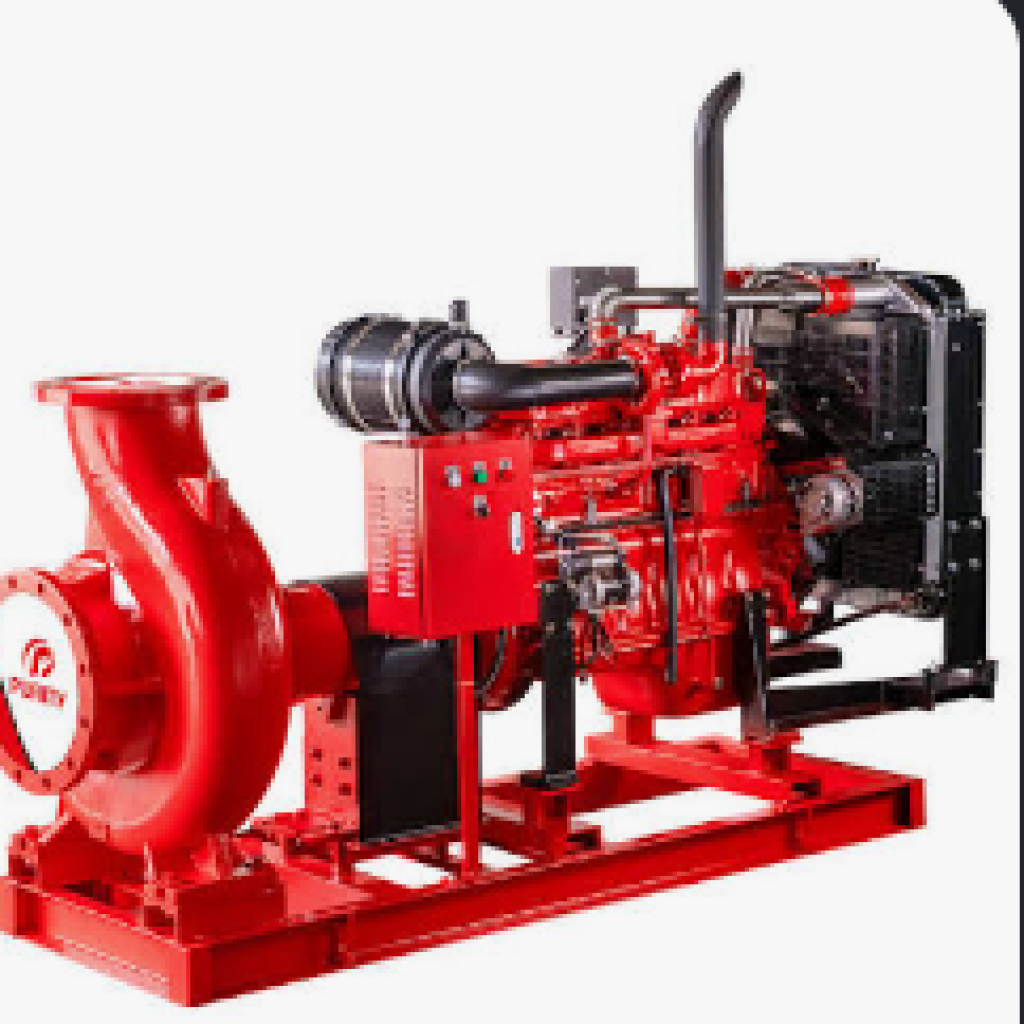
1. The Main Pumps Fire Fighting Pump System in Singapore
The primary pump delivers the designated system flow rate ($Q$) at the calculated total dynamic head ($H$) required to suppress a major fire event.
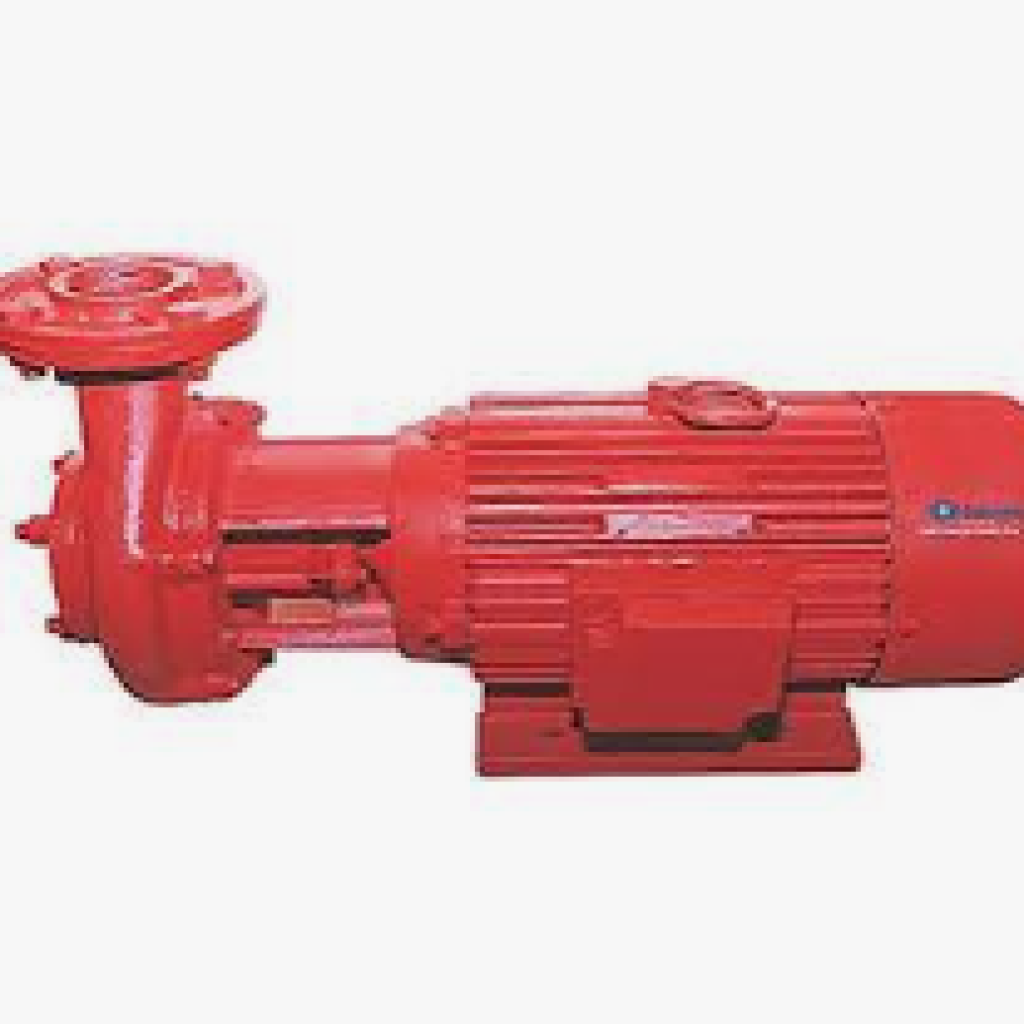
- End-Suction Pumps: Compact and economical, these are ideal for small to mid-sized facilities requiring lower flow capacities.
- Horizontal Split-Case (HSC) Pumps: Highly durable and easy to service, these are preferred for major commercial high-rises and high-flow industrial applications.
- Vertical Turbine Pumps: The ideal choice when drawing from below-ground water sources or deep suction wells, circumventing traditional priming limitations.
2. Drivers (Electric Motors vs. Diesel Engines) Fire Fighting Pump System in Singapore
The power source driving the pump impeller must be highly reliable.
- Electric Motors: These serve as primary duty drivers across most urban facilities due to their lower maintenance requirements and simple start cycles. They must be powered by fire-rated cabling connected to the building’s emergency generator network.
- Diesel Engines: Essential for backup units, these provide independent operation during complete electrical grid failures. They include dual-battery starter arrays to ensure reliable activation under any conditions.
3. The Jockey Pump Fire Fighting Pump System in Singapore
The jockey pump is a low-flow, high-pressure multi-stage vertical centrifugal pump. Its primary purpose is to maintain steady hydrostatic pressure within the piping network during non-emergency periods. By compensating for minor pressure losses from temperature changes or small valve leaks, it prevents the main fire pumps from cycling unnecessarily, reducing mechanical wear across the Fire Fighting Pump System in Singapore.
4. Controller Cabinets Fire Fighting Pump System in Singapore
The controller panel monitors network conditions and manages operational cycles. A compliant Fire Fighting Pump System in Singapore uses dedicated controller units for each pump. These panels track line pressures, initiate automated start sequences, log alarm histories, and stream data to the building’s Fire Command Centre (FCC) or central Building Management System (BMS).
5. Valves, Instrumentation, and Ancillaries Fire Fighting Pump System in Singapore
- OS&Y Gate Valves (Outside Screw and Yoke): These provide visual confirmation of valve position (open or closed) to prevent accidental water shutoffs.
- Check Valves (Non-Return): These prevent high-pressure backflow from damaging upstream components or emptying suction reservoirs.
- Pressure Sensing Lines: Dual non-return check valves installed in a series ensure stable pressure feedback to the control panels, preventing erratic system behavior.
4. Key Performance Metrics and Technical Specifications Fire Fighting Pump System in Singapore
When evaluating a Fire Fighting Pump System in Singapore, specific mechanical performance variables dictate whether the machinery matches the project’s hydraulic challenges.
Rated Capacity and Head Profiles Fire Fighting Pump System in Singapore
Fire pumps operate along a distinct hydraulic curve compared to domestic water pumps. Their performance curves are engineered to be flatter, ensuring stable pressure delivery even as water demand shifts significantly during firefighting operations.
The 150% Flow Capacity Standard Fire Fighting Pump System in Singapore
Under international and SCDF frameworks, a Fire Fighting Pump System in Singapore must deliver 150% of its rated flow capacity at no less than 65% of its rated total head. This ensures the system can handle unexpected open connections, such as multiple landing valves being activated simultaneously by emergency crews.
Churn and Shut-Off Pressures Fire Fighting Pump System in Singapore
The shut-off or “churn” pressure represents the total head generated when the pump runs at full operational speed with all discharge valves closed. To protect system components from over-pressurization, the churn head must not exceed 140% of the pump’s rated nominal head.
Net Positive Suction Head ($NPSH$) Formulas Fire Fighting Pump System in Singapore
To prevent damaging cavitation, engineers must ensure the Net Positive Suction Head Available ($NPSH_A$) exceeds the Net Positive Suction Head Required ($NPSH_R$) by a safe margin:
$$NPSH_A > NPSH_R + 0.5\text{ meters}$$
The calculation for $NPSH_A$ is structured as follows:
$$NPSH_A = P_{atm} + H_s – P_v – H_f$$
Where:
- $P_{atm}$ = Atmospheric pressure head at the installation site.
- $H_s$ = Static water level head above or below the pump centerline.
- $P_v$ = Vapor pressure head of the water at operating temperature.
- $H_f$ = Total friction head losses across the suction pipework assembly.
5. Types of Fire Fighting Pump Systems and Systems Design Fire Fighting Pump System in Singapore
Building layouts dictate the structural design of the water distribution network. A high-rise commercial complex in downtown Singapore requires a different system setup than an expansive logistics warehouse in Tuas.
1. Automatic Sprinkler Pump Systems Fire Fighting Pump System in Singapore
These systems provide continuous, high-volume water flow to automatic sprinkler networks. They activate when a localized temperature spike shatters a sprinkler bulb. The resulting pressure drop prompts the control panel to engage the primary fire pump immediately.
2. Wet Rising Main Systems
Mandatory for buildings where architectural heights exceed the reach of standard ground-based SCDF firefighting equipment, wet rising mains feature permanently pressurized vertical pipe stacks. The integrated Fire Fighting Pump System in Singapore must maintain high pressure across upper-level landing valves, allowing emergency responders to connect hoses and tackle fires on higher floors immediately.
3. Hose Reel Pump Systems
Designed for immediate use by building occupants before emergency services arrive, hose reel setups operate at lower volumes and pressures than main suppression networks. They use small booster pumps to deliver rapid, localized water flow through flexible hose lines.
4. Combined and Multi-Zone High-Rise Configurations Fire Fighting Pump System in Singapore
To manage high static pressures in tall skyscrapers, engineers divide the building’s water network into vertical pressure zones. A typical setup utilizes high-level break tanks, pressure-reducing valve (PRV) stations, and staged pumps to deliver reliable protection without over-pressurizing lower-level components.
6. Sizing and Selection Criteria (Engineering Math & Design) Fire Fighting Pump System in Singapore
Sizing a Fire Fighting Pump System in Singapore requires precise calculation of the facility’s total hydraulic demand.
Hydraulic Calculations (Hazen-Williams Formula) Fire Fighting Pump System in Singapore
Friction head losses across distribution pipe networks are calculated using the classic Hazen-Williams empirical equation:
$$h_f = 6.78 \times L \times \left(\frac{V}{C}\right)^{1.85} \times D^{-1.167}$$
Where:
- $h_f$ = Friction head loss per meter of linear pipe run ($\text{m/m}$).
- $L$ = Equivalent length of the pipe run including fittings ($\text{m}$).
- $V$ = Mean fluid flow velocity ($\text{m/s}$).
- $C$ = Pipe roughness coefficient (e.g., $C=120$ for unlined black steel, $C=150$ for plastic/copper).
- $D$ = Internal diameter of the pipe sleeve ($\text{mm}$).
Total Dynamic Head ($TDH$) Evaluation
The required pump head rating ($H_{total}$) is calculated by combining all systemic elevation steps and operational resistance profiles:
$$H_{total} = H_{static} + H_{friction} + H_{residual}$$
Where:
- $H_{static}$ = Vertical distance from the minimum water level in the suction tank to the highest sprinkler or landing valve.
- $H_{friction}$ = Total accumulated friction loss across all straight pipes, bends, tees, valves, and backflow preventers.
- $H_{residual}$ = Mandatory minimum operating residual pressure required at the highest outlet point (e.g., 3.5 bar for wet risers under SS 575 regulations).
Pump Power Calculations Fire Fighting Pump System in Singapore
The mechanical shaft power ($P_{shaft}$) required by the pump driver is calculated using the following formula:
$$P_{shaft} = \frac{\rho \times g \times Q \times H}{1000 \times \eta}$$
Where:
- $\rho$ = Density of water ($\approx 1000\text{ kg/m}^3$).
- $g$ = Acceleration due to gravity ($\approx 9.81\text{ m/s}^2$).
- $Q$ = Volumetric flow rate ($\text{m}^3\text{/s}$).
- $H$ = Total Dynamic Head ($\text{m}$).
- $\eta$ = Mechanical efficiency of the selected pump model (expressed as a decimal value).
7. The Significance of UL Listed and FM Approved Systems
When specifying a Fire Fighting Pump System in Singapore, international certifications provide assurance that the equipment will perform reliably under emergency conditions.
What is UL Listing?
Underwriters Laboratories (UL) tests equipment components to verify they meet strict safety and operational standards. A UL-listed fire pump has undergone rigorous evaluation of its material durability, casing strength, and rotational tolerances under high-stress conditions.
What is FM Approval?
Factory Mutual (FM) Approvals tests equipment with a focus on risk reduction and property conservation. FM-approved systems are evaluated under challenging commercial scenarios to ensure they deliver reliable performance in complex industrial environments.
Why Certified Systems Matter in Singapore
While SCDF regulations define local installation compliance, specifying UL-listed and FM-approved components provides several practical advantages:
- Reduced Insurance Premiums: Global underwriters often offer lower property insurance rates for facilities equipped with UL/FM-certified assets.
- Verified Reliability: Certified components reduce the risk of structural failures or unexpected mechanical breakdowns during an emergency.
- Streamlined SCDF Inspections: Using internationally recognized, certified equipment helps demonstrate compliance during the Registered Inspector (RI) audit process.
8. Installation, Testing, and Commissioning in Singapore
Proper installation and rigorous commissioning are essential to ensure a Fire Fighting Pump System in Singapore is ready to perform when called upon.
Pump Room Design and Environmental Protection Fire Fighting Pump System in Singapore
The pump room must be a secure environment that protects critical emergency machinery:
- Fire-Rated Enclosures: The room must feature walls and fire doors providing at least a 2-hour fire resistance rating.
- Dedicated Drainage: High-capacity floor drainage or perimeter trenches are required to handle water discharge during full-flow testing.
- Emergency Ventilation: Adequate air exchange is necessary to cool electric motors and provide combustion air for diesel engines.
- Lighting and Power: Independent backup emergency lighting must be installed to ensure visibility during primary power failures.
Hydrostatic Pressure Testing Protocols Fire Fighting Pump System in Singapore
Before operational testing, the entire distribution piping network must pass a hydrostatic pressure test. The system is pressurized to 1.5 times the design working pressure or 13.8 bar (200 psi), whichever is higher, and must maintain that pressure for at least two hours without leakage.
Steps for the SCDF Commissioning Test Fire Fighting Pump System in Singapore
The official commissioning process requires verification across several operational benchmarks:
- No-Flow (Churn) Test: The pump is operated with all discharge valves closed to establish its baseline shut-off pressure.
- Rated Flow (100%) Test: The test line is opened to measure performance at the design operating point, verifying flow rates match original project specifications.
- Peak Load (150%) Test: Flow parameters are expanded to evaluate system stability under high-demand conditions, ensuring discharge pressure remains above the 65% minimum threshold.
9. Operation, Preventive Maintenance, and Troubleshooting Fire Fighting Pump System in Singapore
An emergency water system must remain operational throughout its service life. Regular, structured maintenance is key to long-term reliability.
                +-----------------------------------------+
                |    PREVENTIVE MAINTENANCE CYCLES        |
                +-----------------------------------------+
                                     |
       +-----------------------------+-----------------------------+
       |                             |                             |
       v                             v                             v
+-----------------------------+ +-----------------------------+ +-----------------------------+
|      WEEKLY ROUTINE         | |      MONTHLY AUDIT          | |      ANNUAL TESTING         |
|  Run electric pumps (10m)   | |  Check battery parameters,  | | Full flow-meter analysis,  |
|   & diesel engines (30m)    | |  verify fuel tank reserves  | |  re-certify relief valves  |
+-----------------------------+ +-----------------------------+ +-----------------------------+
Weekly, Monthly, and Annual Inspection Cycles
Regular maintenance routines help ensure system readiness:
- Weekly Tasks: Run electric motors for 10 minutes and diesel engines for 30 minutes to circulate lubricants, prevent fuel stratification, and verify automatic start signals.
- Monthly Tasks: Check battery charge levels, inspect terminal connections, verify fuel reserves, and examine shaft seals for excessive leaking.
- Annual Tasks: Conduct a full flow-meter performance test across the entire hydraulic curve and re-certify relief valve settings.
Managing Local Environmental Challenges
Singapore’s high humidity and warm temperatures can accelerate corrosion and microbial growth. Maintenance teams must regularly check for:
- Algal and Biofilm Accumulation: Microorganisms in suction tanks can clog defensive intake strainers.
- Atmospheric Corrosion: Condensation can degrade electrical contacts inside controller panels, highlighting the importance of anti-condensation heaters.
Troubleshooting Common Operational Issues
| Symptoms / Observations | Probable Root Cause | Recommended Remedial Action |
| Pump activates but fails to deliver water. | Air pockets in suction lines or clogged intake strainers. | Bleed trapped air via casing release valves; inspect and clean strainers. |
| Jockey pump cycles frequently. | Small pressure leaks within the distribution network. | Trace downstream piping with acoustic detectors to find and repair leaks. |
| Excessive vibration during operation. | Misalignment between driver and pump shafts, or worn bearings. | Re-align shaft couplings; replace worn components to prevent structural damage. |
10. Key Considerations When Choosing a Supplier in Singapore
Selecting the right equipment provider is critical to ensuring long-term system compliance and reliability.
Technical Expertise and Engineering Support
Look for suppliers with a proven track record of designing systems that comply with SCDF regulations and SS 575 standards. They should be capable of providing detailed CAD drawings, structural load data, and accurate hydraulic calculations.
Local Service and Parts Availability
During an emergency, downtime must be minimized. Choose a supplier that maintains a well-stocked local inventory of critical components, such as replacement controllers, structural impellers, and specialized packing seals, backed by 24/7 service support.
Testing Capabilities
Select partners who utilize accurate testing equipment, such as calibrated flow meters and digital pressure data loggers. These tools provide clear documentation during commissioning and annual testing routines, helping to simplify regulatory review processes.
11. Future Trends in Fire Pump Technology
New technologies are introducing smarter monitoring capabilities and improved efficiency to modern fire protection designs.
IoT-Enabled Smart Fire Pumps
Modern Fire Fighting Pump System in Singapore installations are increasingly incorporating Internet of Things (IoT) connectivity. Smart sensors can monitor critical performance metrics—such as battery voltage, fuel levels, vibration patterns, and ambient room temperatures—in real time. This data is streamed securely to cloud dashboards, allowing maintenance teams to identify potential issues before they cause equipment failures.
Water-Saving Testing Configurations
Traditional full-flow testing can consume significant amounts of water. To address sustainability goals, newer system designs incorporate closed-loop test arrangements that filter and recirculate water back into suction storage reservoirs, reducing waste while fulfilling regulatory testing requirements.
Integration with Building Management Systems (BMS)
Integrating fire pump controls with a centralized BMS or Fire Command Centre improves overall situational awareness. During an emergency, operators can monitor pump status, line pressures, and valve positions from a single interface, helping teams coordinate faster and more effective responses.
Contact Information:
- Website: https://flomek.com
- Email: sales@flomek.com
- Phone: +65 1234 5678
- Address: 123 Industrial Avenue, Singapore 567890
Get in touch with us today to discuss your project or request a quote. Let Flomek help you find the perfect pump solution to keep your operations flowing smoothly. Pump manufacture in yishun
Also Read – Best pump services Pump manufacture in yishun
Copyright © Flomek 2024, All Right Reserved.Designed and Developed by ❤️ Krigo Softwares


Leave A Reply