





Booster Pump System in Singapore – Singapore’s No 1 Best Pump service & supplier
The Ultimate Architectural & Engineering Guide to Water Pressure Management: Optimizing the Booster Pump System in Singapore
In Singapore’s highly dense and vertical urban landscape, maintaining optimal hydraulic pressure throughout a building’s entire plumbing layout is a continuous engineering challenge. From multi-family residential condominiums and sky-scraping commercial towers to advanced industrial manufacturing facilities in Jurong Island, gravity and massive peak-hour usage patterns constantly work against consistent water delivery. To counteract these physical constraints, property owners, developers, and facility managers rely on a high-performance booster pump system in Singapore.
A properly designed booster pump system in Singapore does more than just fix low pressure in upper-floor showers. It protects expensive mechanical infrastructure, reduces overall municipal energy consumption, ensures absolute compliance with PUB (Public Utilities Board) regulatory frameworks, and preserves water quality across whole properties.
This comprehensive, technical blueprint covers the mechanics, legal regulations, configuration styles, and maintenance workflows required to run a high-performing booster pump system in Singapore.
1. The Core Hydrodynamics of Singapore’s Water Infrastructure
To understand why a booster pump system in Singapore is necessary, you have to look at the unique operating rules of the local municipal grid.
The Baseline Municipal Pressure Rule Booster Pump System in Singapore
The PUB distributes clean water through an underground network of mains, typically supplying a stable baseline pressure between 2.5 to 3.0 bar at the ground connection meter. In physics, $1 \text{ bar}$ of pressure can lift water vertically by roughly 10 meters. While 3.0 bar of pressure easily supports low-rise landed properties or the lower floors of HDB blocks, it is physically impossible for this pressure alone to deliver adequate water to higher vertical elevations.
[PUB Water Main] ──(2.5–3.0 Bar)──> [Break Tank / Buffer Storage] ──> [Booster Pump System] ──(Pressurized Supply)──> Upper Floors
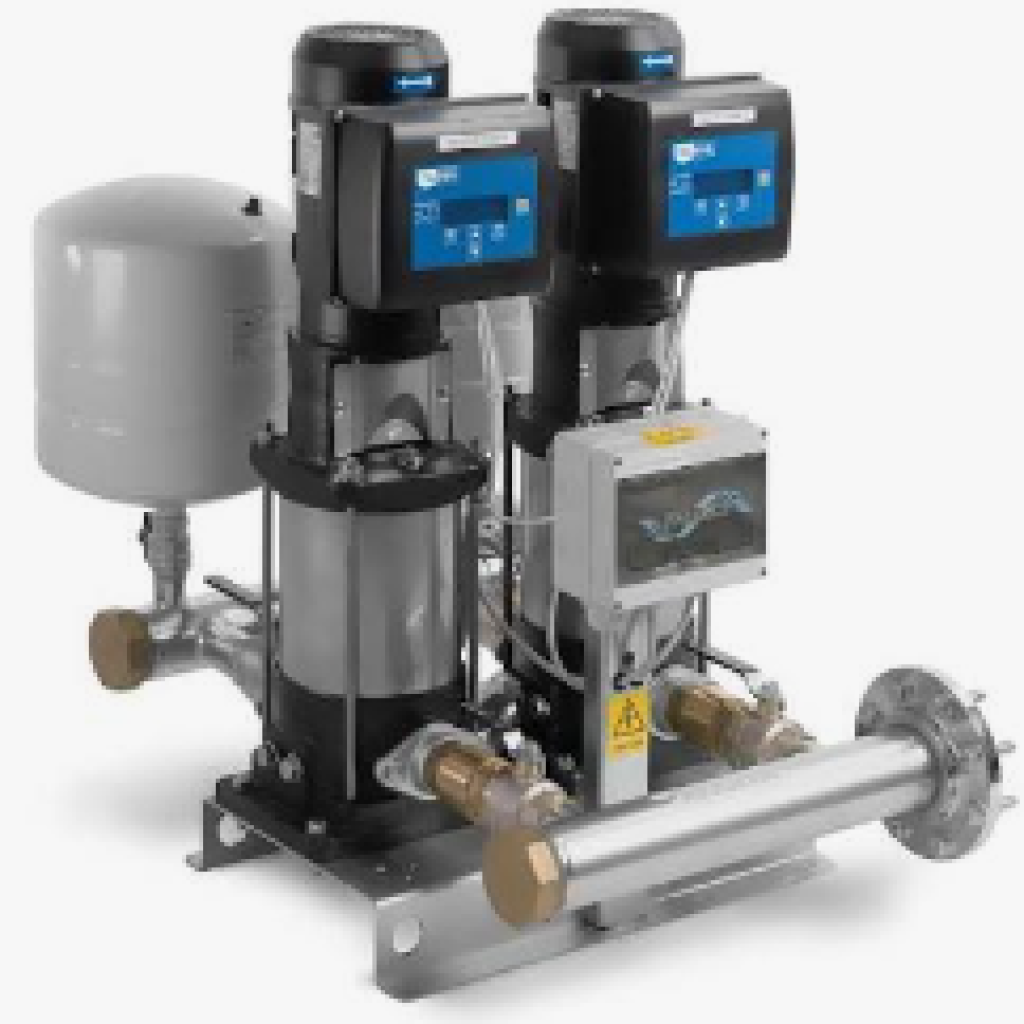
The Impact of Height and Friction Losses Booster Pump System in Singapore
As water travels up a building, it loses pressure due to two major variables:
- Static Head Loss: Gravity pulls the column of water downward, causing a fixed loss of roughly 0.1 bar for every 1 meter of vertical rise (or ~0.3 bar per floor).
- Dynamic Friction Loss: As water flows through copper, PPR, or stainless steel pipes, internal friction against the pipe walls causes a continuous pressure drop. This drop increases around bends, tees, valves, and water meters.
Without a dedicated booster pump system in Singapore, fixtures on higher levels will experience low flow or complete water dropouts, especially during peak morning and evening usage windows.
The Role of Above Mean Sea Level (AMSL) Topography Booster Pump System in Singapore
Singapore’s terrain is not entirely flat. The PUB explicitly uses Above Mean Sea Level (AMSL) metrics to determine local plumbing requirements. If a residential development or manufacturing facility is built on high ground (such as certain zones in Bukit Timah or Pasir Panjang) that sits above 25 meters AMSL, the municipal mains pressure drops even further relative to the building’s foundation. Under PUB’s Code of Practice for Water Services, any property located where natural water mains pressure cannot guarantee a minimum residual pressure at the highest fixture must integrate a certified booster pump system in Singapore combined with an approved storage break tank.
2. Why PUB Regulations Prohibit Direct Pumping Booster Pump System in Singapore
A common question among property managers is whether a pump can be connected directly to the incoming PUB water main to boost pressure. In Singapore, direct inline pumping from the public water mains is strictly prohibited by law.
The Risk of Main Pipe Collapse and Backflow Booster Pump System in Singapore
If a high-capacity pump draws water directly from the public line, it creates a powerful localized vacuum (negative pressure) inside the municipal grid. This vacuum can destabilize public utility lines, causing underground main pipes to collapse or rupture. Additionally, negative pressure can pull external contaminants, groundwater, or non-potable liquids through micro-cracks in public pipelines, threatening the safety of the clean water supply.
The Compliance Solution: Break Tanks Booster Pump System in Singapore
To legally operate a booster pump system in Singapore, the property must feature an atmospheric storage tank, commonly called a break tank or buffer storage tank.
- Municipal water flows naturally via gravity or mains pressure into the break tank, controlled by a mechanical float valve or electronic level sensor.
- The break tank features an air gap that acts as a physical barrier against backsiphonage.
- The booster pump system in Singapore draws water directly from this storage tank, isolating the public supply network from any pressure changes caused by the building’s internal pump system.
3. Classifying Types of Booster Pump Systems in Singapore
Depending on the scale, layout, and purpose of a building, engineers use different types of booster designs to optimize water flow and system longevity.
Single-Pump vs. Multi-Pump Configurations Booster Pump System in Singapore
| Configuration Type | Common Applications | Key Engineering Advantages |
| Single-Pump System | Landed terrace homes, small shophouses, single-story commercial cafes. | Low initial equipment cost, compact physical footprint, easy replacement of isolated parts. |
| Duplex (Two-Pump) System | Mid-rise condominiums, boutique offices, commercial kitchens. | Offers 100% duty/standby redundancy; balances operational wear through automatic alternation. |
| Triplex/Quadplex System | High-rise commercial skyscrapers, large industrial zones, data centers. | Excellent energy scaling; turns on extra pumps incrementally to match heavy peak demand. |
4. Key Mechanical Components of a Booster System
A modern booster pump system in Singapore relies on several interconnected mechanical and electrical components to function reliably.
               ┌────────────────────────┐
               │   Smart VFD Controller  │
               └───────────┬────────────┘
                           │ (Modulates Speed)
                           v
 [Break Tank] ──> [Multi-Stage Pump] ──> [Check Valve] ──> [Pressure Tank] ──> [To Building Network]
                                                                  │
                                                                  └── (Sensor Feedback)
Vertical and Horizontal Multi-Stage Pumps Booster Pump System in Singapore
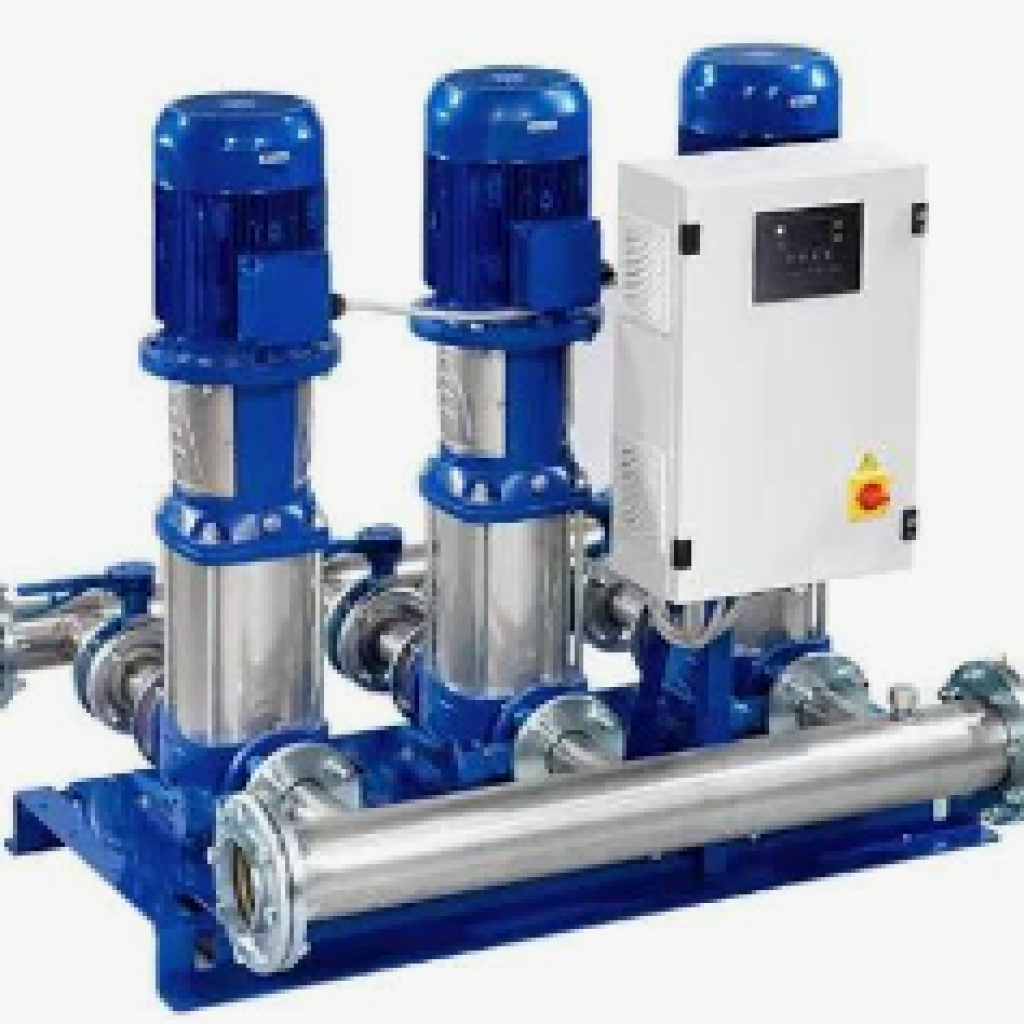
The pump itself is the heart of the setup. Multi-stage centrifugal pumps feature multiple impellers arranged in series on a single shaft. Each impeller adds kinetic energy to the water, gradually building up pressure stage-by-stage. Vertical multi-stage setups are standard in Singapore because their upright footprint saves valuable floor space in tight mechanical rooms or basements.
Diaphragm Pressure Vessels (Accumulators) Booster Pump System in Singapore
An accumulator tank holds pressurized water separated from a compressed air pocket by a flexible, food-grade rubber bladder or diaphragm.
- When water demands are minor (such as a single tap opening), the pressure tank handles the flow using its stored energy.
- This prevents the main pump from turning on for brief, minor water demands, which drastically reduces short-cycling. Short-cycling generates excessive heat and wears out electrical contactors quickly.
Variable Frequency Drives (VFD)
Traditional booster installations ran at a single, fixed speed, using mechanical pressure switches to turn on and off. Modern systems instead use integrated Variable Frequency Drives (VFDs).
A VFD continuously monitors real-time system pressure through an electronic transducer. If pressure drops slightly, the VFD runs the pump motor at a lower speed. If multiple fixtures open at the same time, the VFD instantly ramps up the motor speed to maintain constant pressure. This precise adjustments prevent pressure spikes and drastically lower energy costs.
5. Engineering Calculations: Sizing the System Correctly Booster Pump System in Singapore
Sizing a booster pump system in Singapore requires calculating exact flow requirements and total pressure losses to ensure optimal performance. Undersized systems cause weak pressure during peak hours, while oversized systems waste energy and can burst internal plumbing lines Booster Pump System in Singapore .
Determining Total Peak Demand Flow Rate ($Q$) Booster Pump System in Singapore
Engineers do not simply add up the maximum flow of every single tap in a building, as it is highly unlikely every fixture will run simultaneously. Instead, they use the Loading Unit Method detailed in Singapore Standard SS 601 (formerly CP 48). Every fixture type is assigned a specific loading unit value based on its typical water consumption and usage frequency:
$$\text{Total Loading Units (LU)} = \sum (\text{Number of Fixtures} \times \text{Fixture LU Value})$$
Using standardized conversion charts, these total loading units are converted into an estimated peak demand flow rate ($Q$), measured in liters per second ($L/s$) or cubic meters per hour ($m^3/h$) Booster Pump System in Singapore .
Calculating Total Dynamic Head ($TDH$) Booster Pump System in Singapore
The pump must generate enough pressure to overcome all vertical elevation and internal friction losses. Total Dynamic Head is calculated using the following formula:
$$TDH = H_{static} + H_{friction} + H_{residual}$$
- $H_{static}$: The absolute vertical height from the lowest water level in the break tank to the highest water fixture in the building.
- $H_{friction}$: The total pressure drop caused by pipe walls, bends, valves, and strainers at peak flow.
- $H_{residual}$: The minimum functional pressure required at the top fixture for it to run correctly (typically 1.5 to 2.0 bar for high-end rain showers or commercial appliances).
Net Positive Suction Head ($NPSH$) and Avoiding Cavitation Booster Pump System in Singapore
To keep the pump running efficiently, the incoming suction conditions must prevent cavitation—a destructive process where low pressure causes water to vaporize into tiny bubbles that implode against the impeller, eroding the metal over time. Engineers ensure the Net Positive Suction Head Available ($NPSH_a$) exceeds the Net Positive Suction Head Required ($NPSH_r$) specified by the pump manufacturer, maintaining a safe operating cushion:
$$NPSH_a > NPSH_r + 0.5\text{ meters}$$
6. Sector-Specific Applications Across Singapore
Different industries and building types have unique operational demands when it comes to deploying a booster pump system in Singapore.
High-Rise Residential and Commercial Complexes Booster Pump System in Singapore
In towering structures like those in the Downtown Core or Orchard Road, a single booster system cannot serve every floor without over-pressurizing lower levels, which can burst pipes and damage appliances. Engineers solve this by dividing the building into distinct pressure zones using Pressure Reducing Valves (PRVs), or by placing separate booster pump sets on mechanical floors at different heights to serve specific blocks of floors.
Commercial Kitchens and Hospitality Booster Pump System in Singapore
Hotels and food & beverage facilities require steady pressure and high temperatures. A specialized booster pump system in Singapore built for commercial kitchens must deliver high flow rates to commercial dishwashers and combi-ovens while handling hot water return cycles without losing pressure or breaking down.
Industrial Manufacturing and High-Tech Data Centres Booster Pump System in Singapore
Industrial plants on Jurong Island and data centers in Tuas require continuous water pressure for cooling towers, boiler feeds, and reverse osmosis filtration systems. A booster pump system in Singapore configured for these spaces must integrate with central building management systems (BMS) via industrial protocols like Modbus or BACnet, allowing engineering teams to track system health and performance in real time.
7. Installation Best Practices and Avoiding Common Errors Booster Pump System in Singapore
Proper installation is critical to extending the operational life of your booster pump system in Singapore and keeping noise levels low.
Acoustic Treatment and Vibration Isolation Booster Pump System in Singapore
Because booster pumps generate significant mechanical energy, they can transfer vibrations into a building’s concrete structure, leading to low-frequency noise complaints from residents or office workers nearby. To prevent this:
- Secure the pump assembly onto heavy, inertia-base concrete blocks using high-grade rubber or spring vibration isolators.
- Install flexible, braided stainless steel or reinforced rubber pipe connectors between the pump nozzles and fixed main headers to isolate vibration.
Pipe Support and Correct Check Valve Placement Booster Pump System in Singapore
The weight of heavy main water pipes should never rest directly on the pump casing, as this causes casing stress and misaligns the internal shafts. Always use independent pipe hangers and floor brackets within one meter of the pump assembly. Additionally, position quick-closing, non-slam check valves on the discharge line to stop high-velocity backflow when the pump shuts down, protecting the system from water hammer damage.
8. Comprehensive Maintenance Checklist Booster Pump System in Singapore
Regular preventative maintenance is the best way to avoid unexpected water outages and extend the lifespan of your booster pump system in Singapore.
Daily and Weekly Inspection Routine Booster Pump System in Singapore
- Check the VFD controller panel for any active warning lights or fault history logs.
- Visually inspect pump glands and mechanical seals for signs of water weeping or corrosion.
- Listen for unusual grinding sounds or excessive vibration that could indicate bearing wear or cavitation issues.
Monthly Technical Adjustments Booster Pump System in Singapore
- Manually test and alternate the duty/standby roles between pumps to ensure even wear across the motors.
- Isolate the accumulator tanks and check the internal bladder pressure using a calibrated digital pressure gauge. The air pre-charge pressure should always sit around 0.2 bar below the pump’s programmed cut-in pressure to prevent rapid motor short-cycling.
Comprehensive Annual Servicing Booster Pump System in Singapore
- Measure and record the motor insulation resistance (megger testing) and current draw across all electrical phases to spot insulation degradation before a short occurs.
- Flush out accumulated silt and mineral deposits from the breakdown storage tank to maintain water quality.
- Replace worn elastomeric seals, check valve gaskets, and coupling inserts as needed.
9. Troubleshooting Guide for Common Pressure Issues Booster Pump System in Singapore
When a booster pump system in Singapore experiences issues, identifying the root cause quickly keeps building operations running smoothly.
Problem: The Pump Keeps Short-Cycling Booster Pump System in Singapore
If a pump is constantly turning on and off every few seconds, the issue is almost always a failed pressure accumulator tank. Over time, the internal rubber bladder can rupture, or the air charge can slowly bleed out, filling the tank completely with water. Without the air cushion to absorb pressure changes, the system short-cycles.
- Fix: Check the air valve on top of the accumulator tank. If water spurts out when pressed, the bladder is torn, and the tank needs to be replaced immediately.
Problem: Inconsistent Water Pressure During Peak Hours Booster Pump System in Singapore
If water pressure drops significantly when multiple tenants open taps at the same time, the system may be struggling to meet demand. This can happen if suction strainers are clogged with scale, limiting incoming flow, or if the VFD parameters are configured incorrectly, preventing the pump from ramping up to its maximum design speed.
- Fix: Isolate the system headers, clean out all inline suction strainers, and verify that the VFD feedback loop matches real-time flow demands.
Problem: Excessive Operating Noise and Vibration Booster Pump System in Singapore
A loud, stones-rattling sound inside the pump casing indicates the system is experiencing cavitation. This occurs when the water level in the break tank falls too low, or an unopen suction valve restricts incoming flow, dropping suction pressure below the water’s vapor pressure point.
- Fix: Verify that all suction line isolation valves are fully open and check that the break tank’s float system maintains the proper minimum water level.
10. The Future: Green Buildings and Smart Water Monitoring Booster Pump System in Singapore
As Singapore targets higher sustainability goals under the Green Plan, building owners are focusing on reducing the carbon footprint of their mechanical systems. Older, fixed-speed water systems are major energy consumers, but modern, energy-efficient choices offer an excellent path forward.
Integrating IE5 Ultra-Premium Efficiency Motors
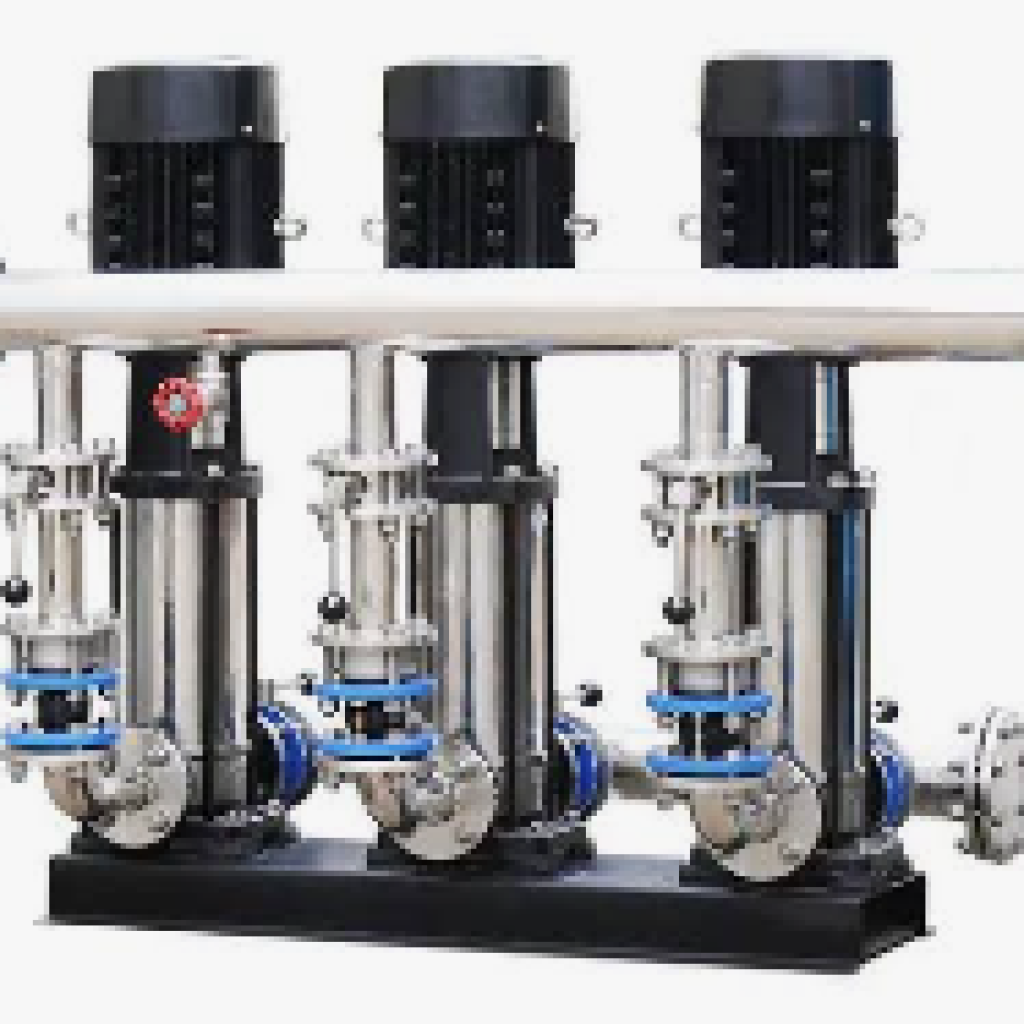
Upgrading older pump infrastructure to integrated assemblies featuring IE5 permanent magnet motors delivers major efficiency gains. These smart motors reduce electrical losses far better than standard induction motors, allowing facility managers to quickly lower monthly utility costs across large commercial and residential properties.
Predictive Maintenance with IoT Sensors Booster Pump System in Singapore
The latest booster pump system in Singapore installations feature cloud-connected Internet of Things (IoT) monitoring packages. These systems place vibration sensors and temperature probes directly onto the pump bearings, tracking real-time performance trends. By analyzing this data, cloud-based software can predict a mechanical seal or bearing failure weeks before it happens, allowing teams to schedule a repair during off-peak hours and prevent unexpected water shutdowns.
11. Step-by-Step Selection Framework for Property Managers Booster Pump System in Singapore
When upgrading or replacing a booster pump system in Singapore, following a structured evaluation process ensures you get the right system for your property:
- Conduct a Comprehensive Flow Audit: Calculate your property’s actual peak water demand based on modern fixture counts rather than relying on outdated original building blueprints.
- Verify Space and Structural Capacity: Ensure your mechanical room or roof zone has the physical space and weight-bearing capacity to accommodate the required PUB-compliant break tank and pump base assembly.
- Define Your Redundancy Needs: For critical facilities like hotels, medical clinics, or high-density residential properties, choose at
Contact Information:
- Website: https://flomek.com
- Email: sales@flomek.com
- Phone: +65 1234 5678
- Address: 123 Industrial Avenue, Singapore 567890
Get in touch with us today to discuss your project or request a quote. Let Flomek help you find the perfect pump solution to keep your operations flowing smoothly. Pump manufacture in yishun
Also Read – Best pump services Pump manufacture in yishun
Copyright © Flomek 2024, All Right Reserved.Designed and Developed by ❤️ Krigo Softwares


Leave A Reply